


“Paris of the East” is what cosmopolitans called Beirut in the 1950s and 60s. While America fought in Korea and Vietnam, and the Cold War raged, Beirut played host to the arts, attracting rich playboys and the educated alike. Lebanon has always been an odd bird, once governed under the Ottoman Empire, and then by the French after World War I. The Maronite Christians, Sunni Muslims, and Druze lived in an uneasy but mostly peaceful coexistence, though marked by some violence. Then, in 1970, after Palestinians in the Jordanian army attempted a coup, King Hussein expelled them to Lebanon, where 400,000 Palestinian refugees also resided. Once in Lebanon, the PLO created its own state. By 1975, the country had descended into full civil war. It has never recovered.
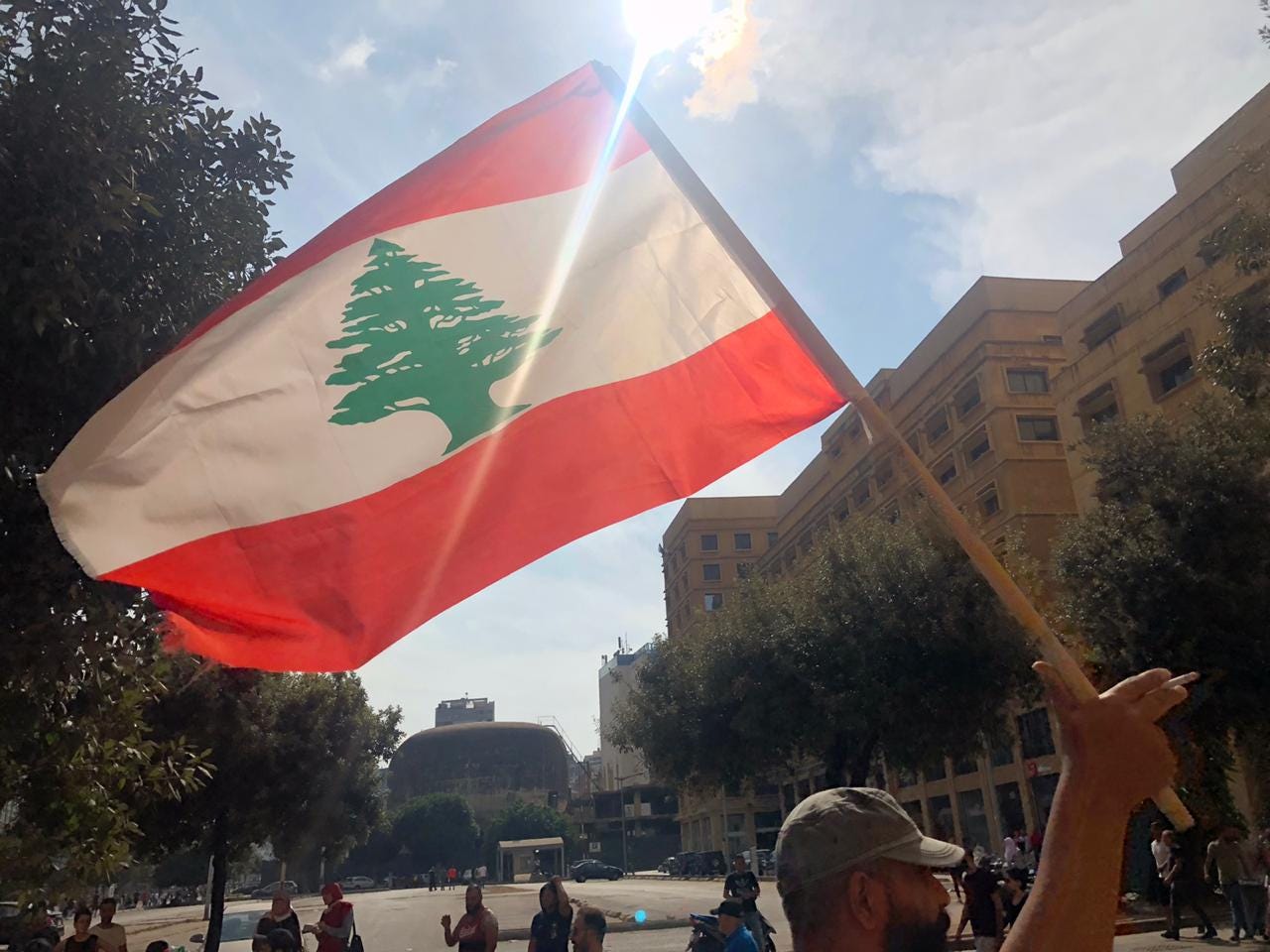
Hezbollah had its beginnings in Lebanon. In 1983, U.S. Marines, who were part of a peacekeeping force, suffered their largest single loss since Iwo Jima when a truck bomb was driven into their barracks in Beirut, killing 220 Marines and 87 others, mostly Americans. The group that claimed responsibility called itself “Islamic Jihad,” and the core of it became the Iran-sponsored Hezbollah, dedicated to the destruction of Israel and the “Great Satan,” the United States.
Beginning in 1976, for nearly 30 years, Syrian troops were quartered in Lebanon and exercised significant control over its political and government functions. In 2005, they went too far by assassinating billionaire Rafik Hariri, the popular two-time prime minister (in Lebanon the prime minister position is reserved for a Sunni Muslim, while the president is a Maronite and the speaker of the parliament is a Shiite Muslim). This led to the Cedar Revolution, which forced Syria out of Lebanon.
Beirut in large part still looks like Paris. It boasts cafés, a boisterous nightlife, and still plays home to intellectuals and artists. However, Beirut is also a battleground. Maronite Christians and Sunni Muslims do not generally mix, and various militant groups, not part of the government of Lebanon, have occupied large swaths of the city. South Lebanon is completely under the control of Hezbollah, which itself is controlled by the IRGC, meaning Iran. It uses this territory as its military base to attack Israel.
Most people do not understand how integrated Hezbollah is in Lebanon. Not only do they have a military that is stronger than the Lebanese army, they are a major political force in its parliament. Hezbollah and its allies control 58 of 128 seats, or 45 percent of the voting members, and represents the largest single bloc in Lebanon’s parliament. The anti-Hezbollah bloc controls between 45 and 55 seats, among shifting alliances. Hezbollah provides its own social and government services to Lebanese living in south Lebanon and other areas it controls. It operates schools, police, hospitals, and all the other functions expected of a government.
Most Lebanese citizens are happy with Hezbollah’s services and support its political wing, at least in some measure. Of the five million-odd Lebanese, plus up to a million refugees, mostly from Syria, and Palestinians who have lived in camps for decades, they depend on Hezbollah to provide for them. Lebanon’s population is split almost evenly between Sunni Muslims, Shia Muslims and Christians, with a small number of Druze. However, the Shias enjoy territorial cohesion in the south.
When Israel says it’s going to destroy Hezbollah, it means to deprive the group of its military ability to attack Israel. But Israel, try as it might for the last 40 years, cannot remove Hezbollah from Lebanon. That’s like saying some group is going to remove the Democrats from America, though Democrats don’t have their own army and aren’t funded by an outside country. But the analogy sticks, because Hezbollah’s power is embedded in the same way.
Thursday, Israeli Prime Minister Benjamin Netanyahu announced that Israel will open negotiations with Lebanon over Hezbollah’s disarmament. The Lebanese government, led by Joseph Aoun, a Maronite Christian, greatly desires to see Hezbollah disarmed. Aoun is the commander-in-chief of the Lebanese army, but does not exercise any control over Hezbollah, which operates in his country. Hezbollah’s orders come from Iran, and Israel has been pummeling the group, which means locations all over Lebanon and Beirut, for months. The latest raid hit 100 targets simultaneously, wiping out another tranche of military commanders and leaders. Aoun would like to see the bombing stopped, but to do so, he must engage with Israel.
Hezbollah will not engage with Israel, and controls the largest bloc in the Lebanese parliament, so if you asked me, the talks are doomed. Perhaps some agreement will be worked out, I just don’t see how it will be implemented. The talks are more likely cover to preserve the fragile ceasefire between the U.S. and Iran. Iran insists the truce includes Lebanon, while the U.S. and Israel claim it doesn’t.
The question here is whether the odd bird, the divided “Paris of the East,” has a future without Iran. If the Iranian Islamic Republic regime is overthrown, what will become of Hezbollah? Nobody really knows.
But as long as the IRGC has control in Iran, and Iran has money (they do) to fund Hezbollah, the group is going nowhere soon. Iran and Lebanon are linked at the hip, and whether Israel and the U.S. want to admit it or not, there will be no getting rid of Hezbollah, only suppressing their military power. Hezbollah will never agree to disarm. There is a possibility, ever so slight, that Israel and the anti-Hezbollah elements of the Lebanese government can come to an agreement forcing the issue. Then it will be up to the world—Europe, the U.S., Russia—to figure out how to do that.
Like everything else in Lebanon, that will be a daunting task, and complicated. It would be easier to overthrow the Islamic Republic in Iran. At least that would be a straightforward invasion and march to Tehran. Lebanon is a much harder nut to crack.

Not a Democrat? Geoff Duncan was once Lieutenant Governor of Georgia. In his book “GOP 2.0,” Duncan recounted his ride in The Beast with President Donald Trump. He spent the rest of the book spinning yarns about his baseball career, and how much he despised Trump. In the end, Geoff Duncan could not offer any real reforms for the GOP. He left office and defended President Joe Biden. Then he became a Democrat. Now he’s running for governor of Georgia.
Other Democrats are catty. In a January debate, Jason Esteves said “I want to address the elephant in this room, and that's the fact that we are in health care crisis because of Geoff Duncan and Republicans who, for the last 15 years, refused to expand Medicaid and then adopted an abortion ban that led to the preventable deaths of Black women.” Others say he’s a Trojan Horse, a Republican in blue. Some highlight his flip on abortion—because you can’t be a serious Democrat and be against abortion, but as a Republican, Duncan was pro-life.
A Republican who held office becoming a Democrat seeking higher office is indeed an odd bird. I read Duncan’s book a few years ago and wrote him a letter asking to grab lunch, since we both live in north metro Atlanta. He never answered me. I guess being that kind of bird means you can’t spend time talking to humble bloggers.
I wish Geoff Duncan would just go away, and become a high school baseball coach or something. Watching the charade is just too annoying.
SOCIAL MEDIA ACCOUNTS: You can follow us on social media at several different locations. Official Racket News pages include:
Facebook: https://www.facebook.com/NewsRacket
Twitter/X: https://twitter.com/NewsRacket
Mastodon: https://federated.press/@RacketNews
Threads: https://www.threads.net/@theracketnews
David: https://www.threads.net/@captainkudzu71
Steve: https://www.threads.net/@stevengberman
Our personal accounts on the platform formerly known as Twitter:
David: https://twitter.com/captainkudzu
Steve: https://twitter.com/stevengberman
Jay: https://twitter.com/curmudgeon_NH
Thanks again for subscribing! Don’t forget to share us with your friends!
Odd bird? Interesting take. Someday it would be fun and enlightening to see just exactly how many conservative/republicans trump has driven from their party.
I would guess the numbers to be staggering.
Couldn't have used "Democrats or Republicans" when talking about how embedded Hezbollah is, huh?