


War came to Iran, as many, including myself, thought it would. President Trump called for regime change, urging the people of Iran to “take over your government.” I have no doubt that this attack was very well planned and coordinated. Even so, many here in the U.S., especially on social media, are channeling doom. Surely, Iran will expand the war into a regional conflict, and surely, the U.S. will be sucked into another “endless war” in the Middle East, this time with Israel as our coalition partner. We will see what happens.
There is a lot of propaganda, rent-seeking, and outright fakery on the Internet, and we’re just a few hours into an operation that may take days or weeks to resolve itself. But I do have some first thoughts on the regional war claim. I think this is a regional war already. It’s not some surprise attack, or what Iraq was, where all the Five Eyes intelligence arms decided to produce nonexistent evidence of Saddam Hussein’s WMD. Trump’s speech correctly characterized the Iranian regime as the “world’s number one state sponsor of terror,” and that they have been, and continue to pursue a nuclear weapon. The Iranian regime and its IRGC has always been a threat to the region’s peace and stability, and not just to Israel, though Israel has been its chief target.
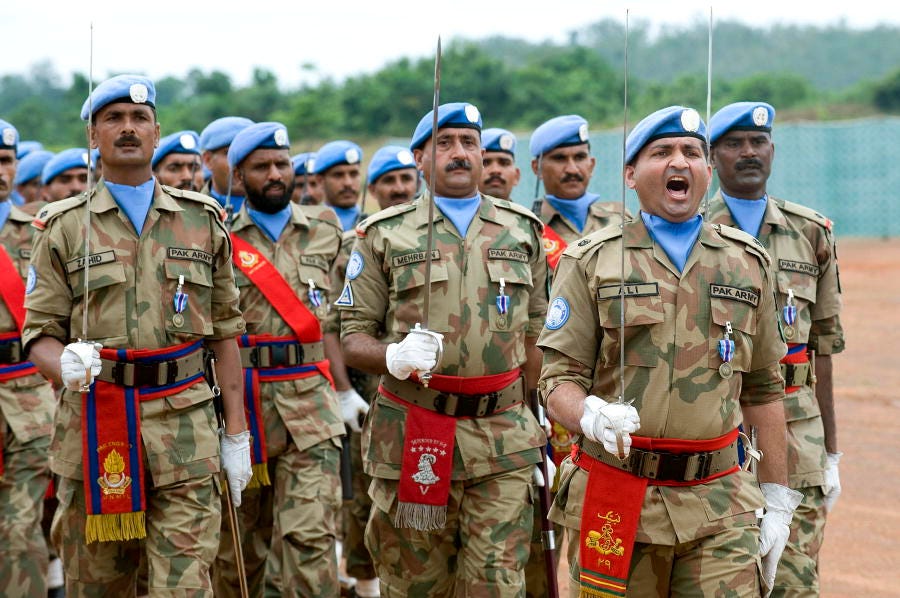
One thing that occurred to me might be coincidence, but I am questioning that hypothesis. It is a happy coincidence that just yesterday, I noted how Pakistan and Afghanistan were at “open war.” Regardless of whether it was planned, we should all thank Pakistan for its attack on the Taliban, which effectively pacifies the Afghans from expanding the war or bringing “boots on the ground” into areas outside Iran.
In 2017, when the U.S. was thinking of clearing out of Afghanistan, our military and intelligence noticed that Iran had begun aiding the Taliban in areas where we withdrew. Iranian commandoes participated in attacks against Afghan and U.S.-supported targets. Iran and the Taliban are not compatible, in a religious or doctrinal sense: Iran’s regime is Shiite and the Taliban are Sunni radicals, but they are together in that they are both radicals and they both despise the U.S. and Israel. The New York Times reported that “Iran has come to see the Taliban not only as the lesser of its enemies but also as a useful proxy force.”
In 2024, amid Israel’s war against Hezbollah, Iran’s proxy in Lebanon, the Taliban promised to send “thousands of fighters” to aid on Iran’s side, according to various news outlets in the region. In September, 2025, a devastating earthquake hit Afghanistan, killing over 1400 people. It was during this time that I saw posts on social media that the Taliban was preparing to move fighters into Lebanon. I remember thinking that if God sent an earthquake, that would be a rebuke against touching the “apple of his eye” (Deuteronomy 32:10). Though these days we don’t usually acknowledge such supernatural acts of power. The point is that the Taliban is ready and willing to work with the IRGC and the Iranian regime.
Just a day before waves of fighters, bombers, and Tomahawk missiles flooded into Iran to hit dozens of targets, Pakistan launched airstrikes against Kabul and other major Afghan cities, and targeted 22 locations across that country. It’s true, there had always been tension between the two countries, and lately it had ratcheted up. So perhaps it’s coincidence. But the effect is real: the Taliban will not be sending troops to aid Iran’s proxies, while its country is under attack by its well-armed neighbor.
Pakistan is an odd bird. They seem to be everyone’s frenemy. Pakistan has good relations with the U.S. and cooperates on many regional issues. But Osama bin Laden found refuge and hospitality there for years while we searched for him and fought in Afghanistan. Pakistan is happy to shelter terrorists, and does little to combat widespread fraud operations that fleece elderly people and businesses from call centers based in their country. Pakistan is technically a rival of India, arguing over borders and territorial claims, with regular clashes and sometimes cross-border artillery fire. But at the Wagah border post between the two nations, border guards from both countries perform a dance-off each day as tourists take photos.
In 1947, Iran was the first country to recognize Pakistan as an independent nation. In the days of the Shah, the two countries enjoyed formal, if not close, relations. After the Islamic revolution in 1979, Pakistan went thought its own religious cleansing. As the U.S. grew closer to Saudi Arabia and the gulf states during our gulf wars, Pakistan grew closer to Iran. But the shifting ties and priorities of Southwest Asia are always in motion. The friend of my friend is not always my friend, and the enemy of my enemy is sometimes my enemy.
Indian PM Narendra Modi just finished a two-day love-fest in Jerusalem, days before this war started. Pakistan and India seem to be stable lately. The U.S. still has deep ties with Pakistan. And Pakistan conveniently attacked the one country Iran could count on to put boots on the ground outside its borders, to fight against Israel and the U.S. During the mass protests recently where the IRGC murdered tens of thousands of Iranians in the streets, foreign fighters, including the Pakistani Liwa Zainabiyoun, and the Afghan Liwa Fatemiyoun were brought in to bolster security. The Taliban is happy to assist anyone fighting the U.S. or Israel, and Iran is a player in that country.
I’d like to think Pakistan is doing the U.S. a favor (not Israel), and keeping the Taliban out of this war. The war is already regional, as many of the gulf nations are already participating. They are absorbing Iranian missile attacks on their territory. Keeping the war from spilling out, we should thank Pakistan from keeping Afghanistan from destabilizing Lebanon, which desperately wants to stay out of the war. This allows the IDF to focus on Hezbollah.
I am not going to comment on the issues of this attack, its legality, or what the likely outcome might be. Those issues will work themselves out. If we are successful, I think the American people and Congress will accept the result. If not, there are lots of things that could happen, politically and legally.
However, I would advise you to be cautious about what you read or believe on the Internet. This is war, and social media, propaganda and fake news is a domain of war. That means you can be duped. There are well-known figures out there who want to dupe you. Believe things you can verify, from well-trusted sources. These are just my first thoughts. I am sure there will be more as we all learn together what is happening.
My final thought for this morning. Many people have been waiting and praying for this day. We are not attacking Iranians. We are liberating them.
locations. Official Racket News pages include:
Facebook: https://www.facebook.com/NewsRacket
Twitter/X: https://twitter.com/NewsRacket
Our personal accounts on the platform formerly known as Twitter:
David: https://x.com/captainkudzu
Steve: https://x.com/stevengberman
Jay: https://x.com/curmudgeon_NH
Tell your friends about us!
"However, I would advise you to be cautious about what you read or believe on the Internet. This is war, and social media, propaganda and fake news is a domain of war. That means you can be duped. There are well-known figures out there who want to dupe you. Believe things you can verify, from well-trusted sources. These are just my first thoughts. I am sure there will be more as we all learn together what is happening."
Amen.
Thank you Steve. Good context and content. Unlike much of what I've read this morning, thoughtful and reasoned.