


There’s a curious dynamic developing in this year’s midterms. A lot of the polling shows that Democrats are doing much better than normal in red states while lagging in a number of races in their home territory. I think the explanation is simple.
If you haven’t been following the polls, the scenario is simple. Democrats are racking up impressive polling results in states like Alaska, Iowa, Kansas, Nebraska, and Ohio. Red states are becoming battlegrounds, yet the traditional battlegrounds are remaining close, and the Democrats haven’t been able to close the deal in blue areas like Maine, Michigan, and Minnesota. The result is a larger number of battleground states than normal.
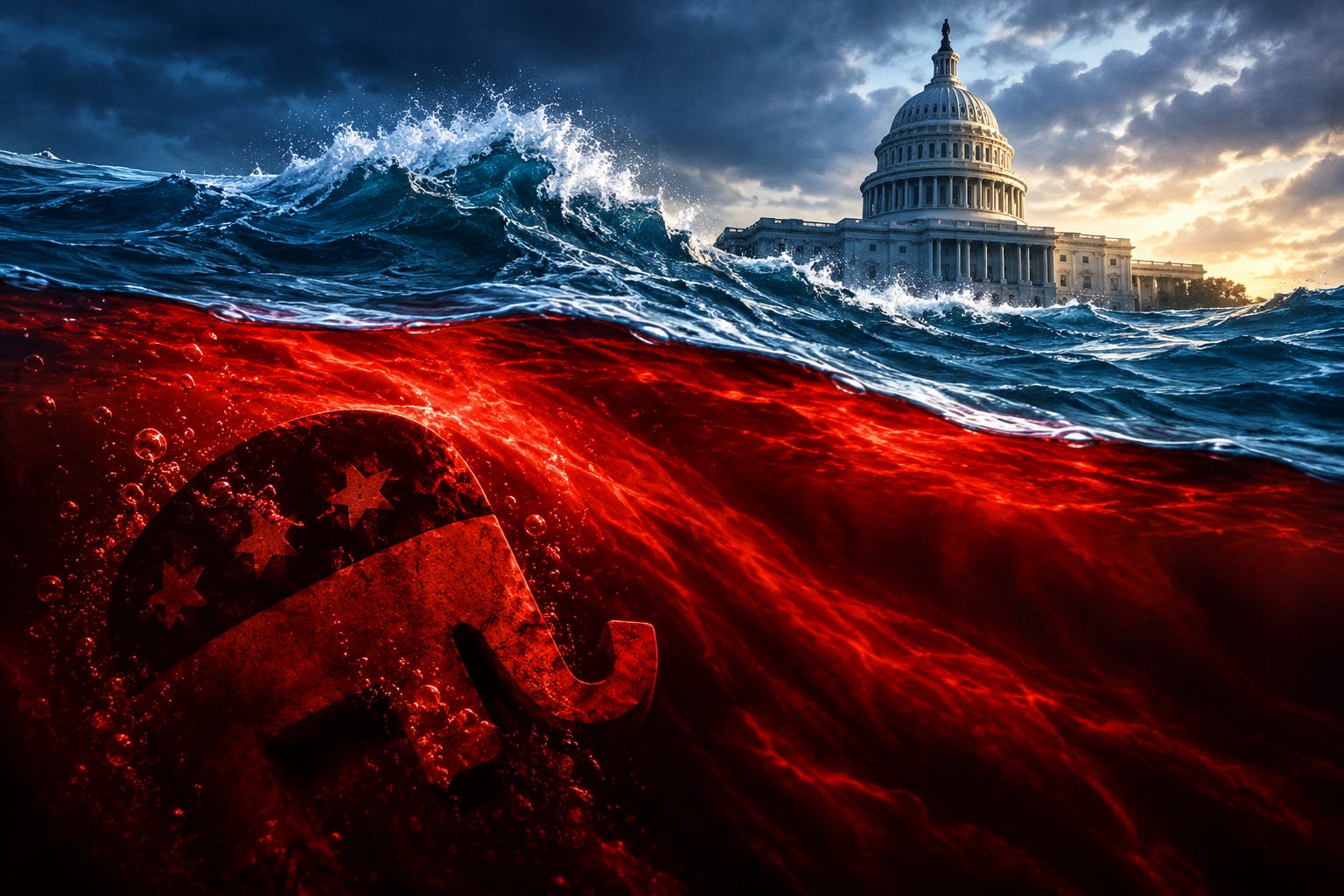
There are several possible explanations for this situation, but it seems to me that the most likely is that what we are seeing is not a blue surge on the merits of the Democratic Party, but a widespread rejection of both Trumpism and progressivism.
The core problem seems to be similar for both parties in that the members of the base that vote in primaries tend to select bad and extreme candidates. We all know about the disastrous choice of Ken Paxton in Texas, but the nomination of Abu El-Sayed in Michigan and Peggy Flanagan in Minnesota were unnecessarily risky partisan choices by progressive and, in some cases, DSA voters. Maine has had its own unique problems with Democratic nominees this year, first nominating a communist and then scrambling to find a replacement when a series of scandals forced him to drop out.
The bottom line here is that moderate and independent voters, the voters who decide elections, don’t like either the Republican MAGA right or the Democratic progressive left. The radical fringes are unconcerned about (or, more likely, blissfully unaware of) their unpopularity, and both keep nominating candidates who would be unelectable if the other side wasn’t nominating people just as bad, or worse.
So far, it looks as though MAGA is less popular than progressives. In most of the swing-state polling, Republicans are trailing. But Republicans are beating themselves more than being victimized by the Democrats. More specifically, the Republicans are being beaten by Trump, who remains unpopular amid high gas and consumer prices, and who just won’t shut up.
Last week, Trump started openly siding with Putin against Ukraine. At roughly the same time, the White House reportedly ordered Ukraine cut off from Elon Musk’s Starlink satellite system (Trump denies this) and then waived the just-passed sanctions against Russia, a move that is drawing criticism even from Republicans. All this while, Russia is providing Iran with intelligence to target American soldiers.
And then there is the Homeland Security raid on Rep. Ilhan Omar’s home. The government has not been forthcoming about the raid on the Minnesota congresswoman’s residence, but a similar investigation in the first Trump Adminstration did not find evidence of the immigration issues that are reportedly at the heart of the search. If the situation looks like lawfare and harassment of a Muslim Democrat for no legitimate reason, the raid may end up motivating more voters to vote against Republican candidates.
Charlie Cook, of the Cook Political Report, christened the polling phenomenon “the red undertow” to underscore the fact that Republican unpopularity hasn’t made Democrats more popular. As I described last week, most voters understand that, while the choice on the ballot isn’t necessarily binary, the outcome of the election almost certainly is.
There have also been a lot of questions about possible polling error. In every election, the theory of the shy Trump voter resurfaces, even though it seems that talking to pollsters just prior to elections is about the only time that Trump voters are ever considered to be shy about anything. And Trump isn’t on the ballot, so Trump voters, shy or not, may not show up anyway.
There is truth to the claim that pollsters are having a hard time talking to Republicans, but that doesn’t necessarily mean that Republican voters are being undercounted. Pollsters weight their results based on what they think the Republican share of the electorate will be. This does introduce more uncertainty into the process, but the error doesn’t always favor the same party, as Nate Silver pointed out. In 2025, much of the polling underestimated Democratic voters. Adding to the confusion, state polling is often much more difficult and less reliable than national polls.
There is a chance that the missing Republicans will show up by Election Day, and polling will break against the Democrats. There is also a chance that Republicans who don’t answer polling calls won’t bother to go to the polls to vote. The Democratic wave might be undercounted.
What seems to be certain is that the national mood does not favor Republicans. Each week seems to bring more stories of Trump hitting a record low in approval. Issues polling, typically national polls with less propensity for error, is finding that the biggest issues for voters are concerns like corruption (88 percent), inflation (85 percent), and high gas prices (83 percent). Those particular numbers are from a Fox News poll, and they don’t sound encouraging for the party in power.
Meanwhile, the Administration is out of touch and unconcerned about voter concerns. As voters worry about prices and the Iran War, Trump seems more concerned about his ballroom and overhauling golf courses. Republicans are partying like it’s 1789, and Trump is in the role of Marie Antoinette saying, “Let them eat cake,” assuming he thinks about them even that much.
The big question then is, if voters are so sour on the job that Trump and the Republicans are doing, why is the polling so close?
The most obvious answer is that we are looking at shy Democratic voters. These are likely moderates and independents who are leaning Democrat but who haven’t fully committed yet.
I think it’s likely that the blue wave still emerges. Whether it’s a red undertow or a blue wave won’t matter much this year, but what Democrats take from the win will make a difference in coming elections. If Democrats get the mistaken impression that their victories this year are based on voter desire for a progressive agenda rather than a rejection of Trump and Republican overreach, those nice, new majorities won’t last long.
To give an update on the polling for the tight Senate races, here is a rundown of current battlegrounds with the current Real Clear Politics average for each (leading candidate in parentheses)
Alaska - Democrat by 2.5 (Peltola) (flip)
Georgia - Democrat by 9.0 (Ossoff)
Iowa - Democrat by 0.9 (Turik) (flip)
Kansas - Republican by 0.7 (Marshall)
Maine - Democrat by 1.6 (Jackson) (flip)
Michigan - Democrat by 3.3 (El-Sayed)
Minnesota - Democrat by 2.9 (Flanagan)
Nebraska - no average
New Hampshire - Democrat by 6.5 (Pappas)
North Carolina - Democrat by 9.6 (Cooper) (flip)
Ohio - Democrat by 2.4 (Brown) (flip)
South Carolina - Republican by 2.0 (Graham Nordone)
Texas - Democrat by 1.4 (Talarico) (flip)
SOCIAL MEDIA ACCOUNTS: You can follow us on social media at several different locations. Official Racket News pages include:
Facebook: https://www.facebook.com/NewsRacket
Twitter/X: https://twitter.com/NewsRacket
Threads: https://www.threads.com/@theracketnews
Blue Sky: https://bsky.app/profile/newsracket.bsky.social
Mastodon: https://bird.makeup/users/newsracket
Our personal accounts on the platform formerly known as Twitter:
David: https://x.com/captainkudzu
Steve: https://x.com/stevengberman
Jay: https://x.com/curmudgeon_NH