


“Sunlight plays a key role in the production of serotonin, a neurotransmitter associated with mood stability and emotional balance,” offered The Science Times writer. “Higher serotonin levels are linked to feelings of calm, focus, and positivity, while lower levels are often associated with fatigue and low mood.” Who doesn’t like to be calm, have focus, and exude positivity? Not me.
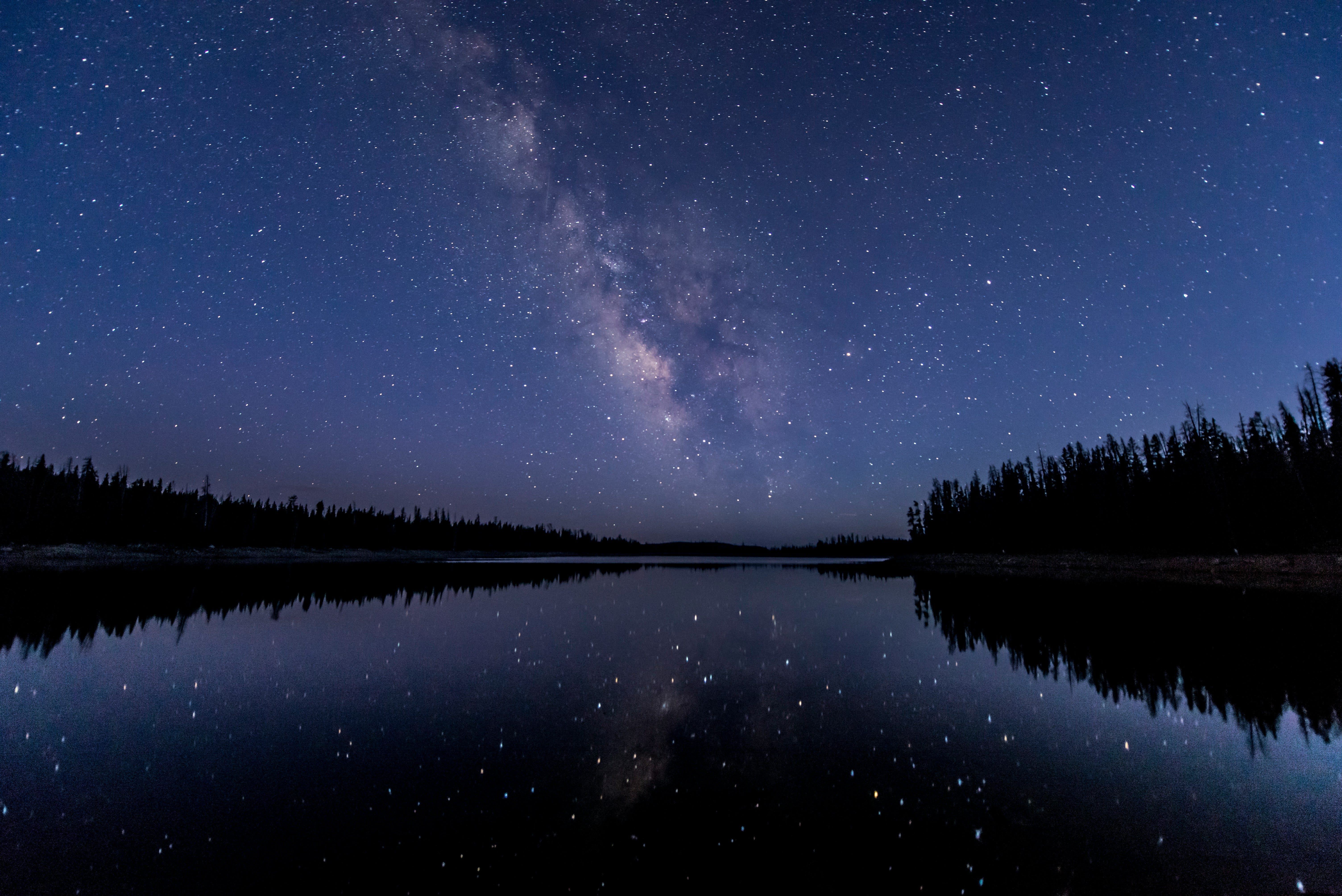
As a boy, I remember early sunrises and late sunsets on the seacoast of New Hampshire. About this time of year, around the summer solstice, the sky gets light sometime between 4 and 5 a.m.; the sun does not set until after 8 p.m. But in the winter, I remember taking the bus to school in the dark, and coming home in the dark. Even now, in the north Georgia winter, I drive to work around sunrise, and get home after sunset. I like my days light and bright.
Congress seems to agree.
In one of the few bipartisan votes these days, the House of Representatives voted to permanently end Standard Time, and put the entire country into Daylight Savings Time year-round. They called it the “Sunshine Protection Act,” and I like the name. Of course, it doesn’t actually create any new sunshine; it merely adjusts the clocks to give us more light at the end of the day, while taking an hour away from the morning light. Many places, this scheme works very well—in Georgia in winter I’d give up my morning sunrise drive to get home while it’s light.
While the House acted to move the bill to the Senate, its fate is far from secure. Some Republicans, according to the New York Times, are not comfortable with the idea, and at least one may try to block it. President Trump is for it, however. “We are going with the far more popular alternative, Saving Daylight, which gives you a longer, brighter Day,” he posted on social media back in May. “And who can be against that.” Again, I’m not against it.
In 2022, the Senate passed the same bill, voting unanimously, but the House killed it over “health concerns” and dark winter mornings. Of course, the sun rises at the same time, astronomically, regardless of how we set our clocks. It could, I suppose, lead to some grouchy people in the northern continental U.S. in winter. But I think shoveling three feet of snow and scraping ice from windshields is far more prone to induce grouchiness than a sunrise an hour later.
Besides, people in Alaska and near the Arctic Circle in Scandinavian countries deal with darkness every year. If you live above 66 degrees, 34 minutes north, you live in darkness at least one day a year (the winter solstice), and frequently for several months where the sun barely peeks above the horizon, if it rises at all. I am not saying northern Alaskans, Canadians in the territories, and Scandinavians are mentally unbalanced, but their particular geography does create challenges.
Putting the entire nation on Daylight Savings Time is my preferred solution to our patchwork of “Spring Forward, Fall Back” Sundays, states and cities that don’t opt in (like most of Arizona), and the stress of changing every clock in the house, not to mention cars (if they don’t update automatically), and old devices that may use an outdated Standard/Daylight schedule in their automatic time settings. (Congress last extended the start and end of DST effective in 2007.)
There have been previous attempts to get the country moved completely to Standard Time, which to me would ruin summer, so, no. Hard pass. But given our political climate, the chance that Congress would even make this small improvement to our lives is vanishingly small. Or perhaps our president will do or say something that will ruin the entire effort.
But legislation is not the only thing that can bring sunshine to our lives. There is at least one company that aims to bring 24 hours of sunlight anywhere on earth.
Reflect Orbital has obtained FCC approval to launch its Eärendil-1 satellite, equipped with an 18m2 mirror that can beam sunlight to light up the night—literally—in a three-mile radius circle, wherever its owners choose.

This is the stuff of supervillains. It can turn anywhere on earth into “Northern Exposure.” Being suddenly forced into 24-hours of sunlight has its own health risks. Arctic people call it “white night insomnia.” Visitors are advised to use blackout curtains to protect their circadian rhythms. Imagine if Eärendil-1 was aimed at, say, Washington, D.C., plunging the Capitol into permanent light. Chaos and insanity due to lack of sleep would quickly take root.
Why would anyone want this? Obviously, to power solar plants 24 hours a day. Reflect Orbital has plans to put up to 50,000 of these sun-reflectors up in orbit, with enough reflective ability to illuminate 1,413,500 square miles—double the size of Alaska—or nearly half the land area of the continental United States. The constellation could keep Europe in permanent daytime, or it could light up a significant portion (around 1.5 percent) of the dark half of the earth and power solar plants continuously.
It could also blind every astronomical observatory on the planet.
Organizations like DarkSky International are outraged. In 2024, DarkSky endorsed the “Dark and Quiet Skies Act” which would have given the National Institute of Standards and Technology (NIST) a say in what is acceptable dealing with the issue of light pollution. Light pollution is what astronomers and environmentalists call excessive proliferation of light in cities, on buildings, and encroaching into nature and wilderness, affecting wildlife, human circadian rhythms, and scientific research.
The “Dark and Quiet Skies Act” was reintroduced in this Congress by Sen. John Hickenlooper (D-CO), but remains stuck in committee. And given that the FCC just authorized the Death Star of light pollution, I don’t see it moving forward anytime soon. Members of DarkSky and the American Astronomical Society flooded the FCC proposal with negative comments, which don’t seem to have had any effect in stopping Reflect Orbital’s efforts.
From the New York Times:
The approval came despite a flood of opposition from astronomers, wildlife experts and others who say the light from the mirrors could distract airplane pilots, wreak havoc on astronomical observations and interfere with circadian rhythms, the light-and-dark cycles that help people, animals and plants know when to wake and sleep, to bloom or to migrate.
Also, who gets to decide which companies, or nations for that matter, get to flood the planet with light from space? If Reflect Orbital can do it, why not the Chinese, or the Russians, or India? We could end up with half the night sky of the planet blotted out with sunlight. It reminds me of the Larry Niven novel “Ringworld.”
To summarize my position here: It’s fine to change our clock schedules, and eliminate Standard Time. It’s not fine to put the Death Star of light pollution into orbit, ruining amateur astronomy for everyone, forever. I think perhaps a letter or call to your senator’s office, or to your representative in Congress, to support the Dark and Quiet Skies Act, might move the needle, even a little. If there’s no actual legislation, perhaps the public outcry might make Eärendil-1’s fate less certain. Or maybe the satellite will get to orbit and fail (not that I’m advocating sabotage).
Day should be day and night should be night. Having less early sun in winter to get home while it’s light is good, even if some health experts say it might make me grouchy (I’m grouchy driving home in the dark too). Having a satellite that could light up my entire town is bad.
What’s your take on this?
SOCIAL MEDIA ACCOUNTS: You can follow us on social media at several different locations. Official Racket News pages include:
Facebook: https://www.facebook.com/NewsRacket
Twitter/X: https://twitter.com/NewsRacket
Our personal accounts on the platform formerly known as Twitter:
David: https://x.com/captainkudzu
Steve: https://x.com/stevengberman
Jay: https://x.com/curmudgeon_NH
Tell your friends about us!
I'm team #UTCEverywhere.
We can keep goofing around with time zones, but it's all going to be for naught once we have a significant number of humans living off-planet in contexts with drastically different solar cycles. (A lunar day is 708.7 hours.)
I find the idea of artificially creating more daylight to be alarming. The health consequences to every living organism on the planet would be catastrophic. Just because we can does not mean we should.