


Political historian and YouTuber Matt Beat (@MrBeat) recently took down a video “Do Presidents Control the Economy?” with the simple statement: “My video aged like milk.” That’s because Mr. Beat assumed that presidents only influence the economy indirectly through policy. Surely a president, without support from Congress, can’t juice or sink the economy.
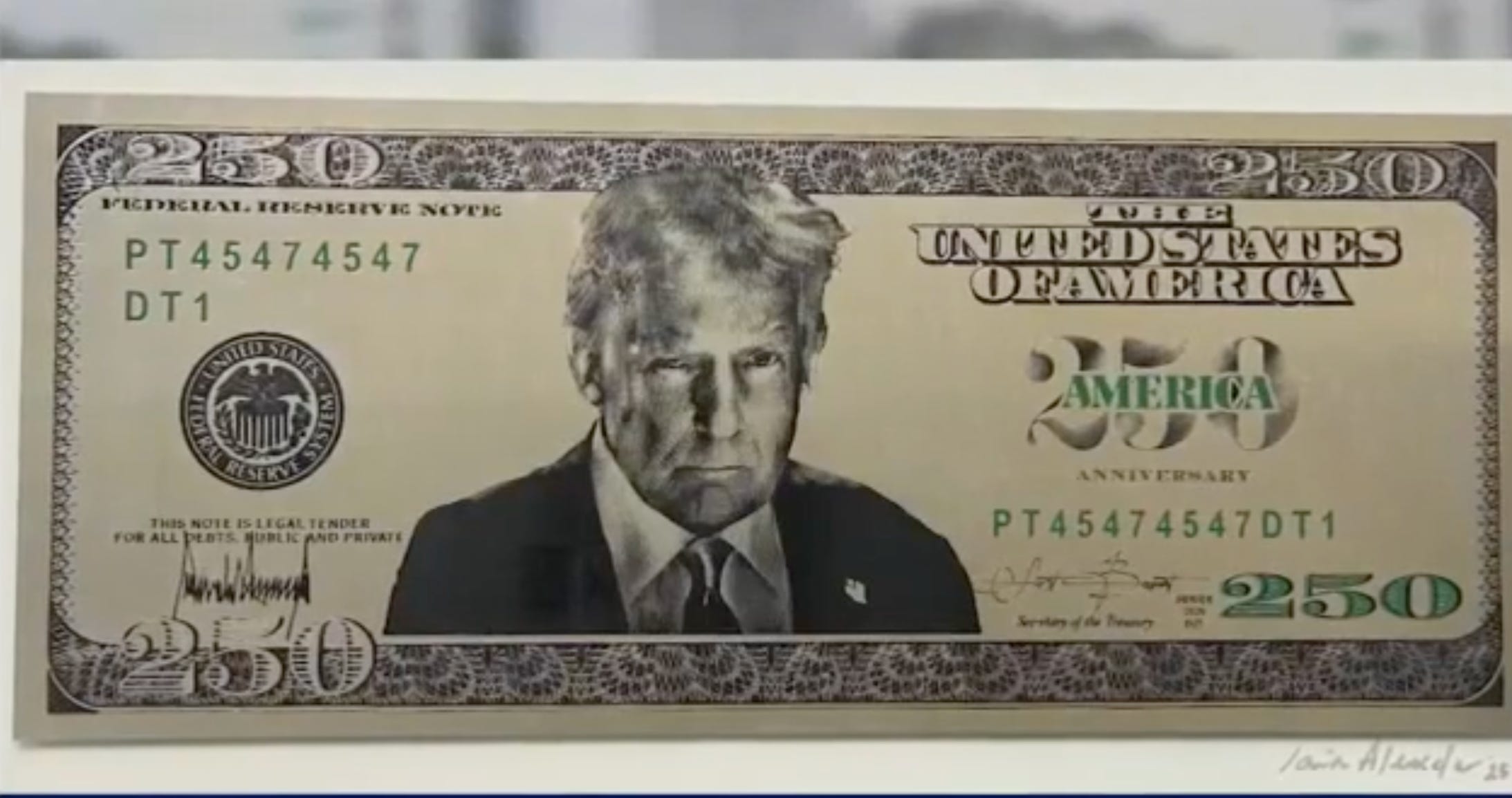
Beat is not alone in his assumption. Nobel winner Paul Krugman (who is wrong about just about everything anyway), Allan Lichtman, Julian Zeilzer, David Mayhew, Bendan Nyhan, et. al., have all noted that voters think presidents control the economy, but in fact they don’t. Voters blame bad economic news on the sitting president, and an incoming president gets credit for his predecessor’s good policies (or just plain dumb luck) when things are rosy. Right?
Except it’s not true. Presidents don’t control the economy generally because they don’t try hard enough. Most presidents either stay within the bounds of constitutional law, or they seek consensus, which dampens big moves. Many presidents possess a degree of integrity regarding self-serving or corrupt actions that keeps their hands off economic levers, or they, in general, want to leave people alone to live their lives, to prosper, or to fail on their own.
But there’s plenty of examples where they didn’t. Back in 1807, our fledgling republic nearly foundered after President Thomas Jefferson signed the Embargo Act, cutting off nearly all foreign trade. That didn’t get repealed until Congress declared war on Great Britain in 1812, a war where we got whupped, but it did stop the British from impressing American sailors into the Royal Navy.
In the early 1930s, President Herbert Hoover ran his campaign on the issue of tariffs to protect American farmers. The Republican party was high on tariffs and determined to hoist the U.S. out of the worldwide depression after the crash of 1929 by extracting money from foreign countries. The Smoot-Hawley bill horrified economists; over a thousand of them signed an open letter warning Hoover that the bill, if signed, would lead to ruin. Hoover signed it, fulfilling his party pledge. And the economists were right. Global trade’s post-crash slide continued, losing 65 percent in the face of retaliatory tariffs set by other nations. Banks failed, farmers went broke and lost their land, and unemployment left millions of Americans impoverished.
In 1933, President Franklin Roosevelt felt he had a calling to fix America by putting the government in control of the economy. His first New Deal moves included control of prices, wages, and production, which many economists believe held recovery back rather than stimulated it. But the New Deal stuck, primarily because FDR was committed to joining the Allies in Europe during WWII. Our Lend-Lease program kept the Soviet Union from succumbing to the Nazis (not necessarily in Moscow or Leningrad, but certainly in Stalingrad). Beginning in 1941, war production ramped up, and during WWII, the U.S. supplied our allies to the tune of $50 billion (over $700 billion in today’s money). Of that, we received about $8.5 billion in direct repayments. The Soviet Union stiffed us, taking until 1971 to pay a paltry $722 million of its war debt. The last Lend-Lease-related debt was not repaid until 2006.
The primary benefit of Lend-Lease was getting people employed, which it did. Then America was in the war, a two-front war, which brought the country to full employment. You can’t blame the war on FDR, but you can look at his policies that put Japan in a difficult place. Again, Imperial Japan was fanatically racist and expansionist. But cutting off oil and steel was not universally supported within the government and by experts. Gen. Douglas MacArthur believed in diplomacy and military pressure, not open war, with Japan. He knew that the Imperial Japanese military would see those moves as a cause for open war.
The reason I bring this up is that a primary economic lever in the hands of a U.S. president is to wage war—not declare war, just to start one. President James K. Polk made war against Mexico, in order to expand United States territory. He succeeded, but in the process, made the schism between slave states and free states a sharper point of contention, hastening the Civil War. That war cost our government around $6.5 billion, a paltry sum—under $100 billion—in today’s money. We don’t know the full cost to the Confederate states, but let’s just say they were ruined for at least half a century. The war also cost us two percent of the population.
President John F. Kennedy got us into Vietnam, but Lyndon Johnson turned it into a full-on war. We all know now that the Gulf of Tonkin was a ruse to expand the war, which Cold War hawks saw as a proxy for keeping the communist domino theory from succeeding (that theory was 75 percent myth). Vietnam cost America $1 trillion in today’s money. It directly led to inflation, then “stagflation” after the 1973 oil embargo.
Wars directly affect the economy. Especially wars embroiled in access to critical natural resources.
Messing with money supply policy and exchange rates also causes major economic change. President Richard Nixon took the country off the gold standard, all by himself. That plus the wind-down of Vietnam triggered a recession in 1973 that lasted two years. We didn’t really recover until President Ronald Reagan got the Economic Recovery Tax Act passed in 1981. This is one of the few success stories where a president brought good economic change. Ballooning the deficit was controversial, but Reagan was a realist, and he did not oppose tax hikes after the recovery took hold.
These all apply to today. We have a president in the White House who has messed with tariffs, and not just a little, but a lot; he has pressured the Federal Reserve; he has created a self-serving crypto-currency and embraced government support of it; he has doled out money to various friendly recipients by the billions, and punished those who don’t toe the line for him. He has used military force to obtain access to oil in Venezuela. He has used military force that led to the closing of the Strait of Hormuz, creating a global crisis in shipping critical raw materials and oil needed for every kind of goods and application.
A president turning all the levers at once like a monkey with an Etch-a-Sketch leads to unpredictable results. But those results are profound and they are likely lasting. President Trump spent all of 2024 hanging the inflation economy around Joe Biden’s neck. What will hang on Trump’s neck by 2028?
We don’t know, but we do know that Trump’s moves, in real time, can sink or juice the stock market. This affects the assets and retirement accounts of scores of millions of Americans. We know that companies won’t hire in a period of uncertainty. We know companies won’t invest in infrastructure without knowing if the investment has long-term return baked in. These companies, currying favor with the guy who can affect the economy single-handedly, make large promises that are never fulfilled. The do it for the photo-ops and the praise of the man who can either reward or punish them.
None of this is new—lobbying is as old as our country. But with this president, everything is in play, including using the South Lawn of the White House to host a mixed-martial arts UFC match.
You know, with economists, it’s all about initial conditions. Political historians and economists have always begun with the assumption that presidents will be constrained by law and Congress, or at least by civil standards. That assumption is proven wrong. And historically, that’s confirmable, except other presidents who violated did a much better job hiding it than the one we have now.
I am convinced that Trump wants what he’s always planned, in his first term, and now. He wants to lower expectations by messing with the economy in ways that cost people, then release those negative effects and show how he “saved” everyone. He is betting on people having memories shorter than a bumble bee. He can be the hero, and everyone will forget that he’s saving them from the past version of himself.
The problem, like it’s always been, is that other countries and other people get a vote in how these policies and actions work as levers in the real world. And it is a jungle out there. Presidents, especially this one, can definitely control the economy, but usually it’s only in a bad way. With our unmanageable national debt, excessive spending, and Congress doing nothing at all, the country is pretty well economically trapped in Trump’s world. That may be reassuring to his biggest fans, but it’s probably not going to turn out to anyone’s liking, other than those who kiss the ring of the King of Mar-a-Lago.
Mr. Beat’s video aged like milk. The Trump economy may age like roadkill.
SOCIAL MEDIA ACCOUNTS: You can follow us on social media at several different locations. Official Racket News pages include:
Facebook: https://www.facebook.com/NewsRacket
Twitter/X: https://twitter.com/NewsRacket
Threads: https://www.threads.net/@theracketnews
David: https://www.threads.net/@captainkudzu71
Steve: https://www.threads.net/@stevengberman
Our personal accounts on X, formerly known as Twitter:
David: https://twitter.com/captainkudzu
Steve: https://twitter.com/stevengberman
Jay: https://twitter.com/curmudgeon_NH
Thanks again for subscribing! Don’t forget to share us with your friends!
True, as evidenced by the weekly or daily spikes in oil prices every time the status of Iran peace talks changes or military action in that region wanes or increases.
However, not stopping Iran before they get nuclear bombs means tolls on BOTH thr Persian Gulf and the Red Sea routes, (Iran aligned with Oman), Iran leading all Middle Eastern Islam, and dreaming of controlling the world under Islam. When would be the best time to stop this? 20 years ago, probably. Criticize the means Trump is using, but no one has come up with a better idea, and kicking the can down the road is not a better idea AND we are running out of road.