


After two weeks of strikes, CENTCOM reports over 3,000 targets have been struck in the air campaign against the Islamic Republic of Iran. Yet in most cities, life goes on. In Tehran, there’s power, water (though there is still a shortage), the street lights are working, and stores are generally open. The strikes have been against government targets, including the IRGC, Basij forces, and some oil facilities. The government is still continuing to function. President Donald Trump called for Iran’s “unconditional surrender” and in another post on Truth Social, promised “certain death” if it didn’t happen. Are these conditions and promises realistic?
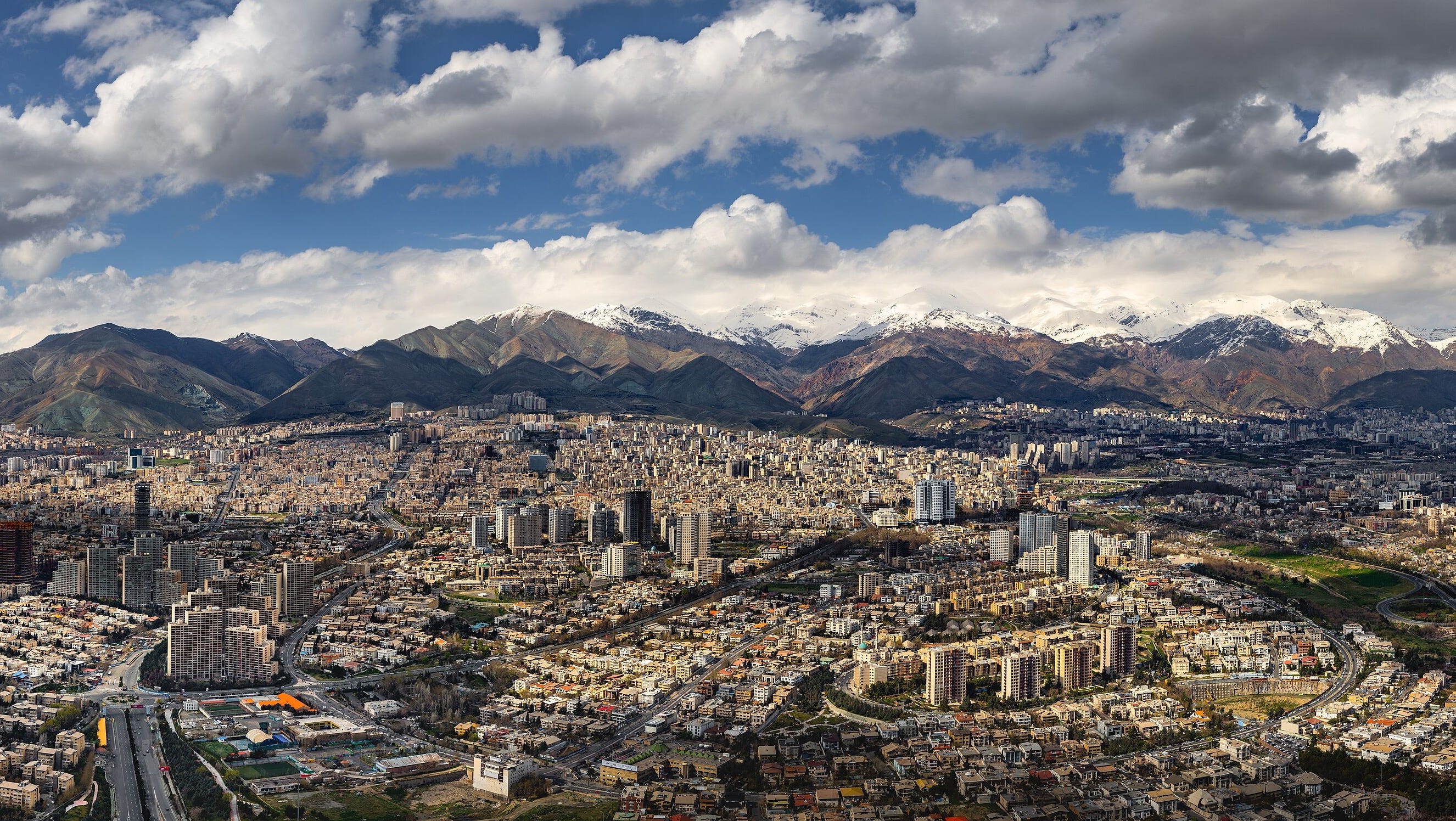

I’ve talked to some ministry friends who know people who operate in Iran, and also read a few articles like this one about the Islamic Republic’s regime. About 15 to 20 percent of Iranians are committed in some way to the Islamic Republic. That includes IRGC members, government officials, clerics, members of the Basij and other structural parts of the theocracy. Iran’s rulers, over 47 years, have constructed a robust, interconnected system of organizations both inside and outside the government that weaves religious, social, economic and military power into cords that are all variously controlled by the Supreme Leader and his “Assembly of Experts.”
Of the other 80 percent of Iranians, about 30 percent are happy to live their lives under the current regime, and mostly want to be left alone by the government. They neither support or oppose the regime. The remaining 50 percent hate the regime and would like to see it removed and replaced with something else, mostly a more secular government committed to the prosperity of Iran and its people, and less interested in foreign issues like destroying Israel.
You’d think with half the country against the government, which has been decapitated and occupied in a war against both Israel and the United States, along with various other nations who have now picked a side, this would be a slam dunk. The American Revolution beat England with only between 25 and 30 percent committed to the cause, and a higher percentage of loyalists to the king against it. (Granted, it took over seven years.) After images of hundreds of thousands of Iranians taken to the streets against the regime, you’d think the current government would be doomed. But it’s not happening, and based on the things I heard and read, it won’t easily happen quickly.
See, the 80 percent of Iranians who might take control have no power to do it. They have no weapons, no power or economic might to take the reigns, because all those things are still controlled by the Islamic Republic. Decapitating the government did nothing to remove the deep levels of control it has over Iran. Note these two paragraphs written by Kian Tajbakhsh, who was imprisoned in Iran in 2007:
“Mr. Tajbakhsh,” he [a young IRGC guard was about 30, polite, restrained, and intensely pious] said calmly, “the fact that I am polite to you should not make you think we are on the same side. I want you to understand something very clearly. I will do anything for this regime.”
The remark was chilling not because it was shouted, but because it was delivered with quiet conviction. This man did not see himself merely as an employee of the state. He saw himself as a soldier of a revolution—and, more than that, as a servant of God acting through that revolution.
The current Iranian revolution started in earnest about 2009, around the time of the “Arab Spring” that overturned so many other dictators in that hemisphere. Time after time, the government reacted by arresting the leaders and crushing the protests. The last protests in late 2025 and early 2026 are the largest to date. I think if Israel and the U.S. hit at the height of those protests, possibly the government might have toppled, but even then, the country might have devolved into a bloody civil war, and in that war, the regime still has all the power.
While grateful, the Iranians who wish to see a better Iran still have no means to get it. So what does that mean for the U.S.?
President Trump has been clear that his goal is not regime change. What he wants is realignment. He wants to impose the Venezuela template on Iran. He gets to pick the leader, or if he wants to keep the leadership they already have, like the U.S. did in South America, leaving Delcy Rodriguez in charge of Nicolás Maduro’s government, but controlling much the oil exports, while reopening diplomatic relations.
Iran’s Assembly of Experts picked Ali Khamenei’s son, Mojtaba Khamenei, as the new Supreme Leader. At 56, the younger Khameini had been groomed for his father’s role for many years, and this is no surprise to anyone that he was chosen. I think the Trump administration would be open to talks and negotiations with the new leader, based on Trump’s goals, in order to end the war and declare victory quickly. However, Israel is also a participant in this war, and Israel wants regime change. The Israelis have announced that any new Supreme Leader, along with the Assembly of Experts who chose him, are now targets for assassination. Should Trump choose to engage in negotiations with people Israel still considers to be enemies, that might drive a wedge in U.S.-Israel relations. But we will see.
I think it will be difficult to dismantle the Islamic Republic, but possible to layer some kind of economic, secular power between it and direct control of the people and the economy. I’ve read that one possibility is for the U.S. to seize Kharg Island, where 80 to 90 percent of Iran’s oil is loaded onto tankers near the Hormuz Strait. That would be a difficult and risky operation, but the island itself is not particularly well defended. Destroying the island’s oil terminal, pipelines and other infrastructure would be short-term devastating to Iran’s oil economy, which would harm the people against the regime much more than the regime itself. This is why it hasn’t already been hit. Seizing and holding the island would require ground forces on both the island and likely in southern Iran, where the pipelines originate. These troops would be exposed to drone and missile attacks, and the U.S. could incur significant casualties.
If the U.S. could successfully seize and hold Kharg Island, and control the flow of oil from Iran, reopen the Strait of Hormuz, and suppress Iran’s missile and drone launches, then I think the Islamic Republic would have little choice but to negotiate. However, Israel would need to be satisfied somehow. I don’t know what that “deal” would look like.
Donald Rumsfeld, President George W. Bush’s Secretary of Defense, famously answered a question about Saddam Hussein’s weapons of mass destruction with the phrase, “there are unknown unknowns.” There are things we know we know, known knowns, things we know we don’t know, known unknowns, and things we don’t know at all, to the point we don’t know what we don’t know, the unknown unknowns. Of all the things happening in Iran, its future is really in the category of unknown unknowns.
We don’t know if the people will rise up again on their own. One day, I believe the regime will fall, and it would fall with or without the U.S. helping. It’s just too repressive to stand. But are we striking while the iron’s cold? We don’t know. We don’t know how armed Kurds in the north will fare, should they be allowed or encouraged to cross into Iran. We don’t know if other gulf nations will continue to support our war. We don’t know how the Russians and Chinese will respond, depending on our actions. We don’t know how Israel will respond, though we have a better grasp on that.
Combined together, all these things become a melange of unknown unknowns, because they have a complex relationship of cause and effect with each other. This is not a straight domino effect where we can predict the end from the beginning. Our government walked into this war somewhat blind to the end, but knowing we’d likely get to the point we’re at around the time we arrived at it—a two week air and missile campaign. That campaign did not dislodge the Islamic Republic. It will take much more than that to accomplish the goal of regime change.
We can only hope that the unknown unknowns don’t come back to bite us, because the people working for the regime are not dumb, neither are they incompetent, and many are deeply committed to the cause of their religious beliefs. That is going to be difficult to overcome without the cooperation of people within the movement. I don’t think the regime will be overthrown outright. I think the most likely outcome is a deal. In the end, we’ll make a deal with the Iranians, except we will have done so after “mowing the lawn” on their nuclear program, their proxies, and their missile launch capabilities. They of course can rebuild all those things.
In the end, we might get oil. and some fealty, for a time, like we got in Venezuela. But really, all this war might buy us is time. However, time is what the Iranians need to free themselves, so is that worth it? That’s an unknown, too.
SOCIAL MEDIA ACCOUNTS: You can follow us on social media at several different locations. Official Racket News pages include:
Facebook: https://www.facebook.com/NewsRacket
Twitter/X: https://twitter.com/NewsRacket
Mastodon: https://federated.press/@RacketNews
Threads: https://www.threads.net/@theracketnews
David: https://www.threads.net/@captainkudzu71
Steve: https://www.threads.net/@stevengberman
Our personal accounts on the platform formerly known as Twitter:
David: https://twitter.com/captainkudzu
Steve: https://twitter.com/stevengberman
Jay: https://twitter.com/curmudgeon_NH
Thanks again for subscribing! Don’t forget to share us with your friends!
Thanks for your robust coverage of this.
Excellent analysis. In the end it is the unknown unknowns that often git you where you don’t want to be got.